ELive-Chill&Stream
- 3.2
- Rating
- 5.00M
- Installs
- Free
- Price

 Analysis by App-foxy
I approached ELive-Chill&Stream as a lifestyle app for people who want to watch content, connect with others, and spend some relaxed time in one place. That sounds simple, but the real question is whether the experience remains comfortable when your attention, vision, hearing, movement, or surroundings are not ideal. After using it with that question in mind, I found an app with an easygoing purpose and a fairly approachable starting point, although its modest average rating of 3.0 suggests that the experience is not equally smooth for everyone.
The app is free to install, which makes trying it low-risk. It comes from Efun Team and is aimed at Teen users, so it is not positioned as a children’s product. It has passed the one-million-install mark, giving it a sizeable audience, but popularity alone does not guarantee that every screen will feel clear or comfortable. My overall impression is that ELive works best for casual viewing and social discovery, especially when I have time to explore without needing a highly structured or productivity-focused interface.
How readable and navigable does ELive feel?
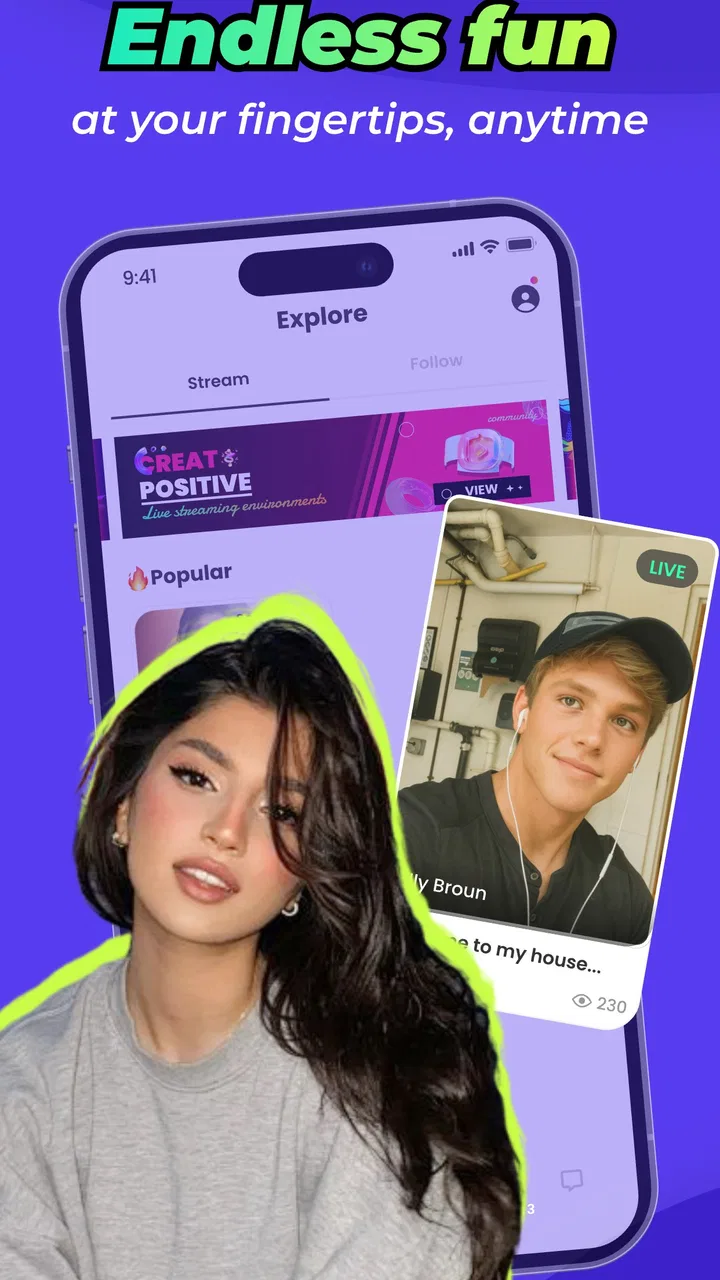
The first thing I look for in a streaming-and-connection app is whether I can understand the main purpose of each screen without studying it. ELive benefits from a direct concept: watch something, find people, and enjoy lightweight interaction. That makes the app easier to approach than a service overloaded with unrelated tools. I did not need to think of it as a complicated platform before beginning; its lifestyle focus is apparent from the way the experience is framed.
You May Also Like

 Blood Strike: 2.5 Anniversary
Blood Strike’s Loadouts Turn Every Drop Into a Tactical Gamble
A close look at Blood Strike’s custom loadouts: how fast access to signature weapons reshapes its battle royale rhythm, rewards preparation, and narrows the gap between fights.

 Pandora - Music & Podcasts
Pandora’s Music Is Easy to Start, but Harder to Recover
Pandora’s strength is its low-effort path from a seed to a station. Its weak spot is how much confidence it asks you to place in connection, setup, and quiet recovery.

 8 Ball Pool
 Is Built on Rivalries, Rematches, and Routine
A close look at the rivalries, rematches, shared routines, and unanswered safety questions that turn a quick pool match into a persistent mobile community.

 Samsung Music
’s Quiet Strength Is Playing What You Already Own
Its reach comes less from spectacle than from dependable access to a personal library. That simplicity is both the app’s strongest retention engine and its ceiling.

 AccuWeather: Weather Radar
AccuWeather Review: A Quick, Clear Forecast for Everyday Decisions
For everyday plans, the best forecast is the one you can understand quickly. AccuWeather makes rain timing, radar, and local conditions easy to act on, with a few trade-offs.

 Hill Climb Racing
Why Hill Climb Racing Still Turns Crashes Into One More Run
A tiny car, a bumpy hill and one more upgrade: Hill Climb Racing keeps resurfacing because its simple chaos makes every near-miss feel personal.
More From Our News Desk



That simplicity matters for people who are new to social streaming. Someone who is comfortable with video apps but less familiar with live community spaces can start with the viewing side and gradually explore the connection features. I would recommend that approach rather than trying to understand every part at once. It reduces cognitive load and gives the interface a chance to become familiar through repetition.
There is also a useful distinction between visual simplicity and genuine readability. A screen can look uncluttered while still making labels, controls, or changing content difficult to follow. For me, ELive is most comfortable when I am giving it my full attention. It is less suitable when I am quickly checking something while walking, multitasking, or trying to follow a conversation from a distance. Those are not unusual conditions, but they expose the difference between an app that is easy to open and one that is consistently easy to read.
I found it helpful to create a personal routine: open the app, spend a moment identifying the main viewing area, then decide whether I want to browse or interact. This sounds minor, yet it prevents the common problem of tapping around without knowing what changed. Users with memory difficulties or limited attention may benefit from using the same route each time. A predictable habit can compensate for any uncertainty caused by busy or changing content.
The current version is 1.8.0, and the app supports devices running Android 6.0 or later. That broad system requirement is useful for people who keep an older phone rather than replacing it frequently. At the same time, an older compatible operating system does not tell me how comfortable the app will be on every screen size or with every device setting. I would judge the experience on the phone I actually plan to use, especially if text scaling or display magnification is important to me.
One practical tip is to avoid judging the app during a rushed first session. I would open it at home, with the phone held at a comfortable distance, and learn where viewing and social actions appear before relying on it in a noisier or more demanding setting. This is particularly helpful for users who need extra time to interpret visual changes. The app’s relaxed theme works better when I use it deliberately rather than treating it like a quick utility.
Finding a comfortable reading rhythm
For people with dyslexia, attention differences, or visual fatigue, the amount of movement on a social viewing screen can matter as much as the wording. ELive is not the sort of app I would choose when I need a quiet, text-first environment. Its appeal comes from watching and connecting, so the user may need to divide attention between content and interaction. I found that shorter sessions are easier to manage than trying to follow everything happening at once.
A useful workflow is to choose one goal before opening the app. I might decide that I am only browsing for something to watch, or that I am checking the social side for a short conversation. That small decision makes the experience less mentally crowded. It also helps users who become overwhelmed by multiple simultaneous choices, because they can leave the other parts of the app for a later session.
People who depend on large text, strong contrast, or screen readers should check how their existing device settings behave inside the app before committing to regular use. I would not assume that a setting that works perfectly in a reading app will feel identical in a streaming interface. The important practical test is whether labels remain understandable while content is moving and whether controls remain easy to locate after display adjustments.
Motor, hearing, and sensory considerations
ELive’s social nature makes touch accuracy and timing relevant. When an app asks me to browse, select, watch, and possibly respond, repeated small gestures can become tiring for someone with tremors, reduced dexterity, joint pain, or one-handed use. I would not describe it as a tool designed around motor accessibility; I would describe it as an app that may be manageable if the user’s device setup and personal pace are a good match.
My strongest advice for users with motor limitations is to use the app in a stable position rather than holding the phone in the air. A stand, a table, or a supported grip can make browsing less tiring and reduce accidental taps. The same approach helps anyone using a smaller phone, because social and viewing interfaces often leave less room for error than a simple list of articles.
It is also worth separating discovery from interaction. Browsing can be done slowly, while joining a conversation or responding may require quicker decisions. If a user finds rapid touch actions difficult, I would spend more time on the viewing side and treat social participation as optional rather than feeling pressured to use every part of the product. That is one of the app’s advantages as a lifestyle experience: it does not have to be used in exactly one way.
Hearing is another important consideration. An app built around watching and connecting may be difficult to enjoy if the user cannot clearly hear spoken content or surrounding audio. I would test it with the phone’s usual volume setup and, where appropriate, headphones or another listening aid already used in daily life. Captions, transcripts, or other hearing-support features should never be assumed simply because an app includes video or social communication. If spoken content is central to what I want to follow, I would verify that the particular material is understandable to me before settling in.
For users sensitive to sound, motion, or rapidly changing visuals, the best strategy is to control the environment first. I would lower the phone volume, avoid using the app when tired, and take breaks instead of pushing through sensory overload. A short session in a calm room tells me more than a long session when I am already overstimulated. ELive can be a pleasant way to unwind, but “relaxing” depends heavily on the content I choose and the sensory conditions around me.
A less obvious trade-off is that social connection can be both supportive and demanding. Some people enjoy the feeling of being around others without needing to speak, while others may feel pressure to respond or keep up. I would use the app in a way that protects my energy: watch first, interact only when comfortable, and leave when the experience stops feeling restorative. That advice is especially relevant to users with anxiety, fatigue, or attention-related conditions.
Using it when the situation is not ideal
ELive is more accessible in some everyday contexts than its basic description might suggest. I can imagine using it during a quiet break, while resting at home, or when I want casual entertainment without opening several separate services. The combination of watching and connecting may reduce the effort of switching between a video platform and a social app. For someone who likes a little companionship during downtime, that combined purpose is the main reason to try it.
Consider a realistic evening scenario. I have finished my tasks, my attention is limited, and I want something lighter than a long film. I open ELive with the intention of watching for a short while, browse at my own pace, and decide whether I want any social interaction. If the content feels too busy, I can treat the session as simple viewing rather than forcing myself to participate. In that situation, the app’s flexible lifestyle angle works well because it accommodates different levels of engagement.
It can also suit someone who is socially curious but not ready to make a large commitment. The free entry point means I can explore before deciding whether the service belongs in my routine. However, I would be careful with optional spending. In-app purchases range from $0.99 to $99.99 per item, so the free installation should not be confused with an entirely cost-free experience. I would set a purchase limit in the device settings, particularly if the phone is shared or if impulse spending is a concern.
People who use mobile data carefully should plan sessions rather than leaving streaming open without thinking. I would use a reliable connection when possible and avoid treating the app as background entertainment for hours. This is not only about data use; longer viewing sessions can also increase battery drain and sensory fatigue. A short, intentional session is a better fit for the app’s casual character than leaving it running indefinitely.
Travel and public spaces create another set of challenges. Bright sunlight can make a phone screen harder to read, while noise can make spoken content difficult to follow. In a crowded place, social interaction may also become uncomfortable because I cannot give the app enough attention. I would choose ELive for a settled break rather than for a commute where I need to remain alert to announcements, traffic, or people around me.
The Teen content rating is a useful reminder that the app should be approached with age-appropriate judgment. I would not hand it to a young child as though it were a child-focused viewing service. Teens and adults can decide whether its social atmosphere suits them, but families should still consider how a young person handles online interaction, spending prompts, and content discovery. The app’s relaxed tone does not remove the need for sensible boundaries.
Where the inclusive experience still has limits
The biggest limitation is that ELive’s accessibility depends heavily on the user and the content rather than on a clearly specialized design promise. A person who needs a highly predictable interface, extensive text alternatives, or very precise control over sensory output may find a dedicated accessibility-oriented service more dependable. I would choose a conventional video platform when captions, playback controls, or a carefully organized library are my main priorities. I would choose a focused social platform when conversation tools matter more than watching.
That comparison is important because ELive sits between familiar categories. It is not simply a passive video library, and it is not only a messaging space. The blend is appealing, but it can also make the experience less focused. Users who want to complete one task quickly may prefer an alternative built around that single purpose. ELive makes more sense when I value the combination itself and am willing to explore.
The average rating of 3.0 from around 4.7 thousand ratings reinforces my cautious approach. I do not treat that figure as a verdict on every device or every user, but it tells me not to promise a universally polished experience. The app has attracted more than one million installs, yet a large audience can include many different expectations. Someone looking for entertainment may judge it differently from someone depending on it for reliable communication or accessible viewing.
Another barrier is the need for self-management. I have to decide how long to stay, what kind of content suits my energy, whether I want to interact, and whether an optional purchase is worthwhile. That freedom can feel comfortable for confident users, but it may be tiring for people who need stronger guidance. A more structured alternative may be better for anyone who becomes anxious when there are too many possible next steps.
I would also avoid using ELive as the only way to keep up with important information or people. Its value is casual and lifestyle-oriented, not a replacement for dependable communication channels. If I need a message to be noticed, a meeting to be accessible, or content to be available in a specific format, I would use a service designed around that requirement and treat ELive as an optional extra.
Before installing, I would ask myself four practical questions. Can I comfortably read and tap on my phone’s current display settings? Do I enjoy a mix of viewing and social discovery rather than a single-purpose service? Can I manage optional purchases responsibly? And will I mainly use it in a calm setting where I can give it proper attention? If the answer to most of these is yes, the free download is a reasonable experiment. If not, another app may save time and frustration.
My inclusive verdict after using ELive
I see ELive as a casual lifestyle app with a welcoming idea but a user experience that needs to be judged personally. I like that it can support different levels of participation: I can watch, explore, or connect without treating every session as a serious commitment. That flexibility is valuable for people whose energy changes from day to day. It also makes the app more approachable than a platform that expects constant interaction.
Still, I would not recommend it as a universal accessibility solution. Users with visual, hearing, motor, cognitive, or sensory needs should test the exact parts they rely on, using their normal device settings and preferred support tools. The app may work well for relaxed browsing in a controlled environment, while proving less comfortable in noisy, rushed, or visually demanding situations. That distinction is central to my opinion.
Efun Team has placed ELive in an interesting middle ground between streaming and social leisure. Its free price makes exploration easy, while the Teen rating and optional purchases call for sensible boundaries. The version available now is 1.8.0, and the older Android requirement may help people using devices that are not new. Those practical details broaden its reach, but they do not replace hands-on testing for individual access needs.
I would recommend trying it to a teen or adult who wants informal viewing with the possibility of connection, especially someone comfortable managing their own pace and phone settings. I would suggest skipping it in favor of a dedicated alternative if captions, highly structured navigation, minimal sensory stimulation, or reliable task completion are essential. For me, ELive is worth considering as a flexible way to unwind, provided I use it intentionally and keep its limits in view.
FAQs for ELive-Chill&Stream
01What is ELive-Chill&Stream and how does it work?
ELive-Chill&Stream is an interactive live streaming platform that allows users to broadcast and watch live content. Streamers can share their experiences, play games, or engage in discussions, while viewers can interact through live chat. The app aims to create a community-driven environment where users can chill, stream, and connect globally.
02Is ELive-Chill&Stream free to use?
Yes, ELive-Chill&Stream is free to download and use. However, it may offer in-app purchases or subscription options for enhanced features, such as exclusive content or ad-free viewing. Users can enjoy the basic features without any cost, making it accessible to everyone.
03What devices support ELive-Chill&Stream?
ELive-Chill&Stream is available on both Android and iOS devices. The app is optimized for smartphones and tablets, ensuring a seamless experience across different platforms. It is recommended to use the latest version of your operating system for optimal performance and access to all features.
04Are there parental controls available on ELive-Chill&Stream?
ELive-Chill&Stream includes parental control options to ensure a safe environment for younger users. Parents can set up restrictions to control the type of content their children can access. These settings help monitor and manage the viewing experience, maintaining a family-friendly atmosphere on the app.
05How does ELive-Chill&Stream ensure user privacy and security?
ELive-Chill&Stream prioritizes user privacy and security by implementing robust data protection measures. The app uses encryption to secure personal information and interactions. Additionally, users can manage their privacy settings to control who can view their streams and interact with them, ensuring a safe streaming environment.
Pros
- User-friendly interface for easy navigation.
- High-quality video streaming with minimal lag.
- Diverse content categories to suit all tastes.
- Interactive features enhance viewer engagement.
- Regular updates with new features and fixes.
Cons
- Limited offline viewing options.
- In-app purchases can be pricey.
- Occasional ads interrupt viewing.
- Requires strong internet for optimal use.
- Some content is region-locked.

ELive-Chill&Stream
Gallery